
Research
6 enterprise software trends to watch heading into 2027
What 2,000+ enterprise software buyer transcripts reveal about slowing spending growth, a higher bar for new purchases, and why some platforms are becoming harder to replace.
Thomas Teravainen, Isabelle Lowe
Enterprise software buyers are evaluating more vendors as spending growth slows. But that interest isn’t translating into easier wins. Cost, complexity, and the capabilities already available in existing platforms are raising the bar for new purchases.
Below, we explore six trends to watch heading into 2027 directly from decision-makers in the market.
Download the 23-page report for additional charts and buyer commentary.
How we built this: Qualitate conducted 2,000+ structured interviews with enterprise software buyers in 1H’26 focusing on next-twelve-month plans, benchmarked against prior studies. Every data point and underlying transcript is available on the Qualitate platform. Connect with us to learn more.
1. Spending growth is slowing across every category
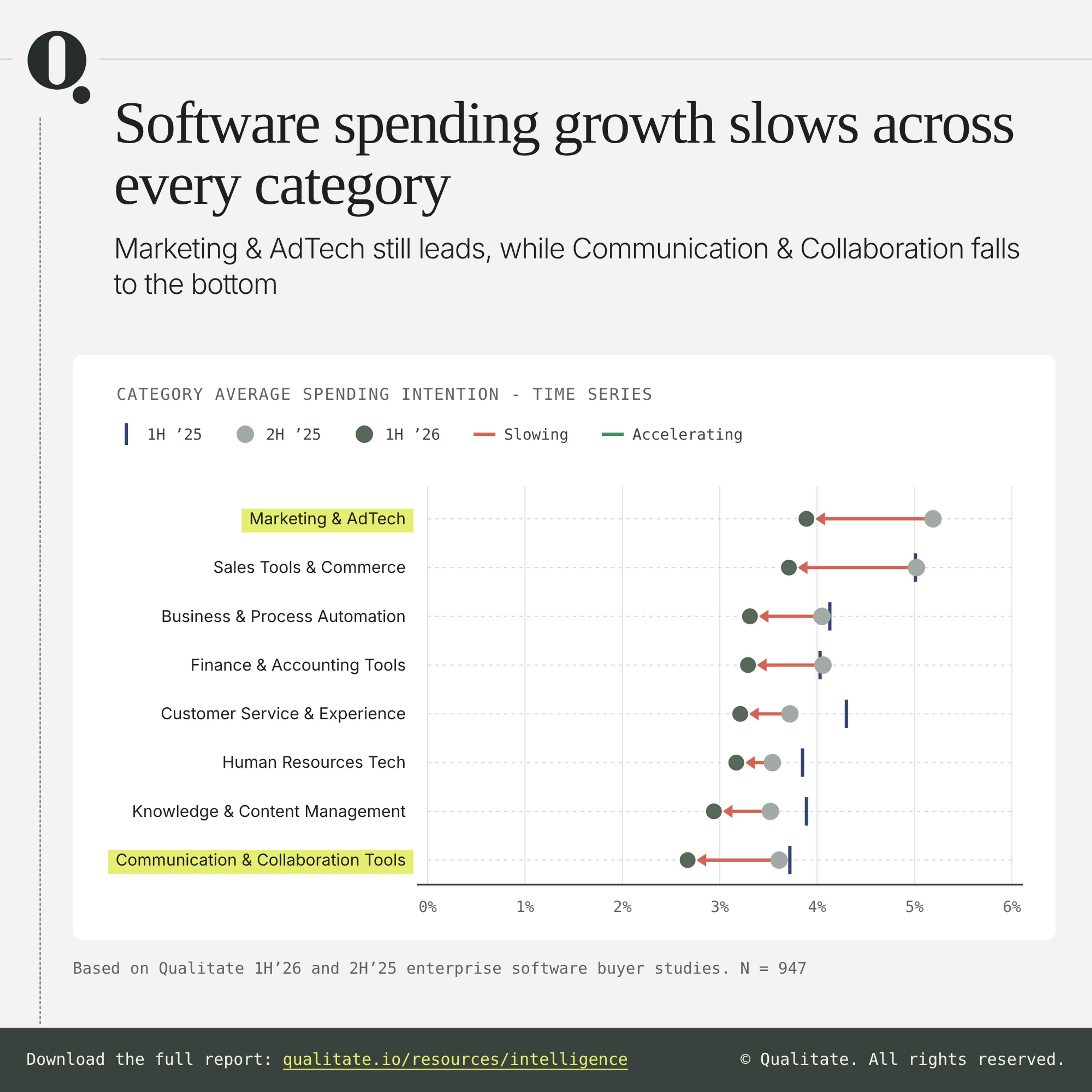
Buyers’ expected spending growth declined across all eight enterprise applications categories compared with our prior study.
Marketing & AdTech still leads, followed by Sales Tools & Commerce. Communication & Collaboration now sits at the bottom, as buyers consolidate tools and make greater use of capabilities included in existing subscriptions.
2. More evaluations are meeting a higher bar for purchase
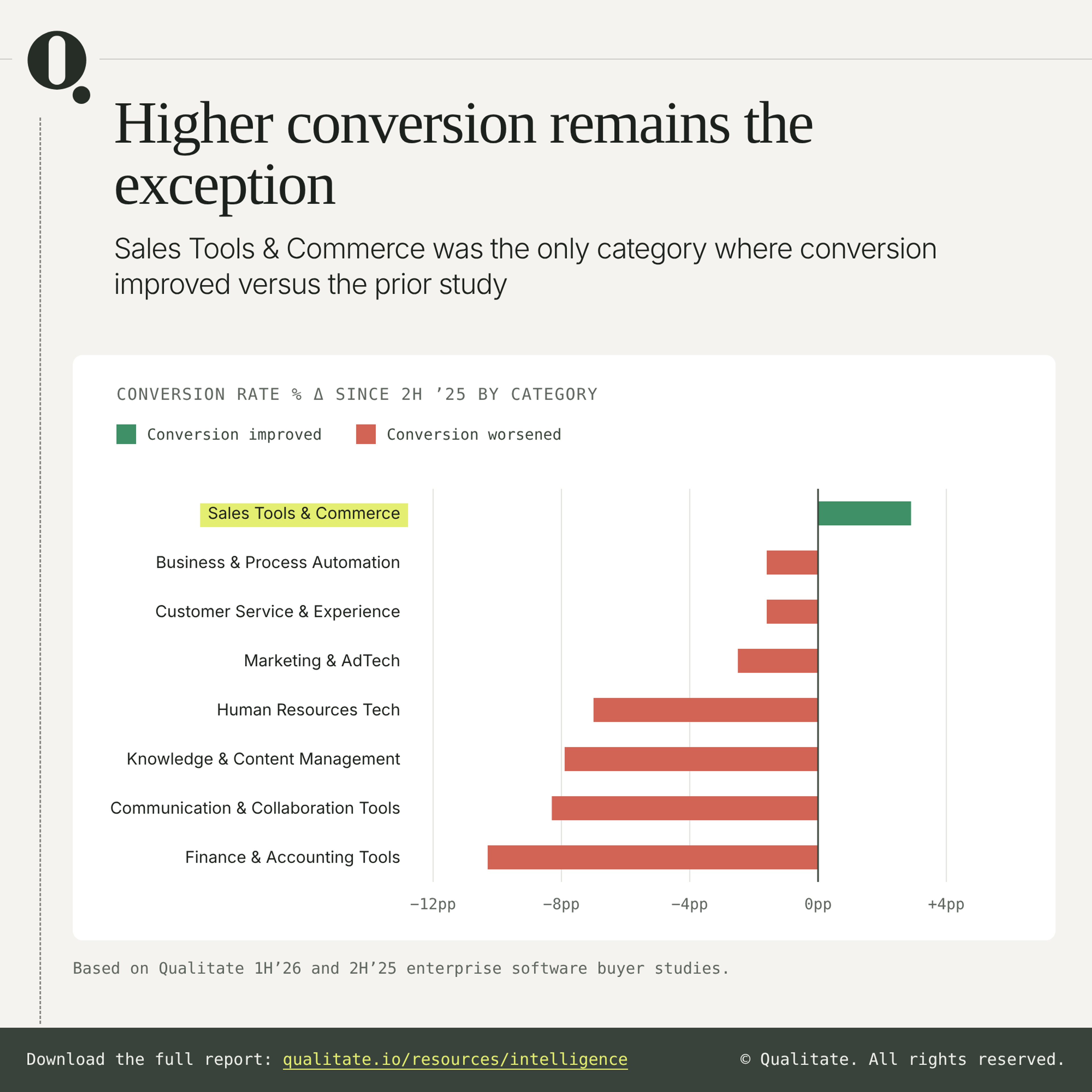
Vendor evaluations rebounded across nearly every category, while overall conversion rates continued to weaken.
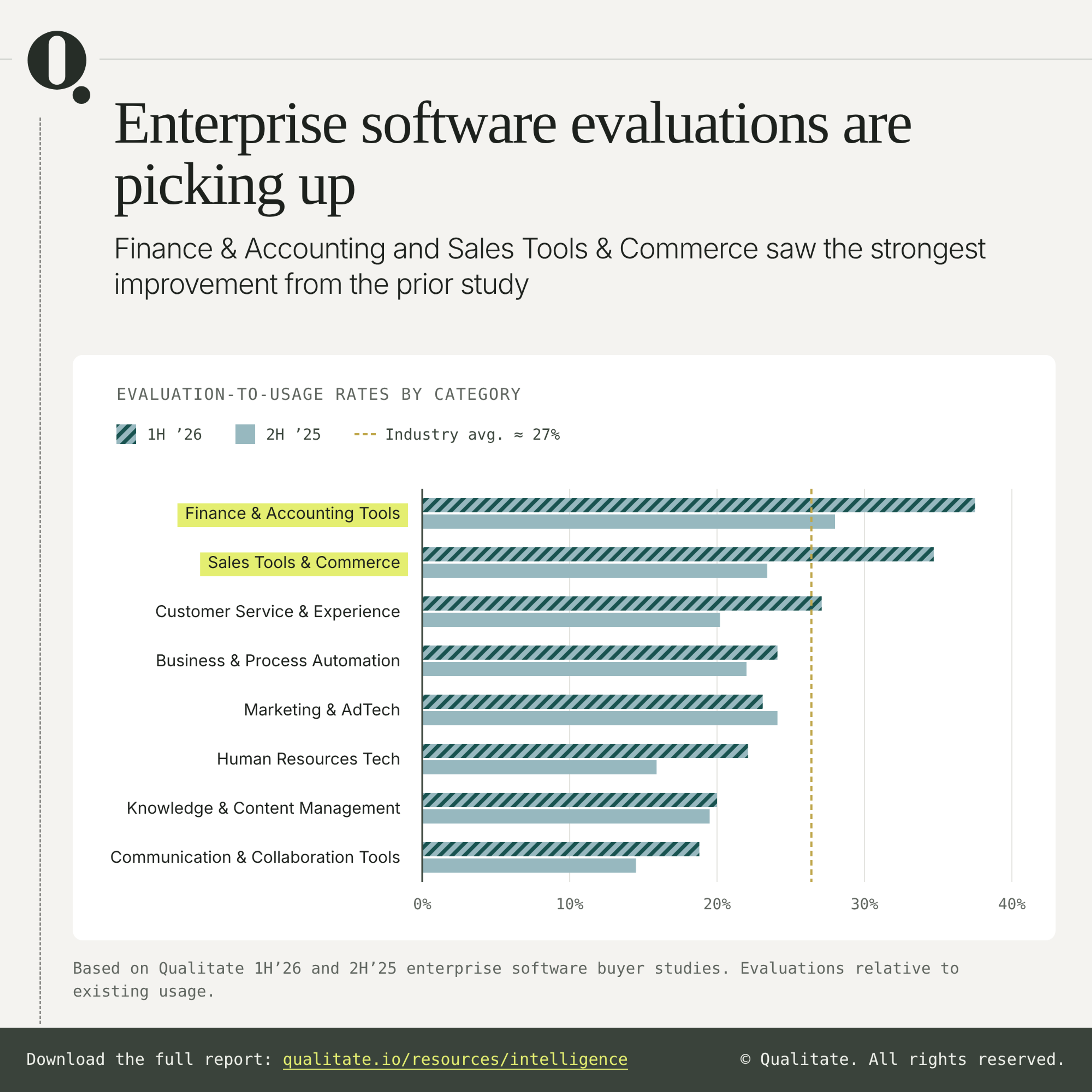
Finance & Accounting shows the disconnect most clearly. It has the highest evaluation rate in the industry, but the lowest conversion rate. Buyers want to automate manual work, yet frequently decide against new products because of high costs, unnecessary complexity, or poor fit with existing systems.
Sales Tools & Commerce stands out as the only category where conversion improved versus the prior study.
3. Value for money is climbing the purchasing agenda
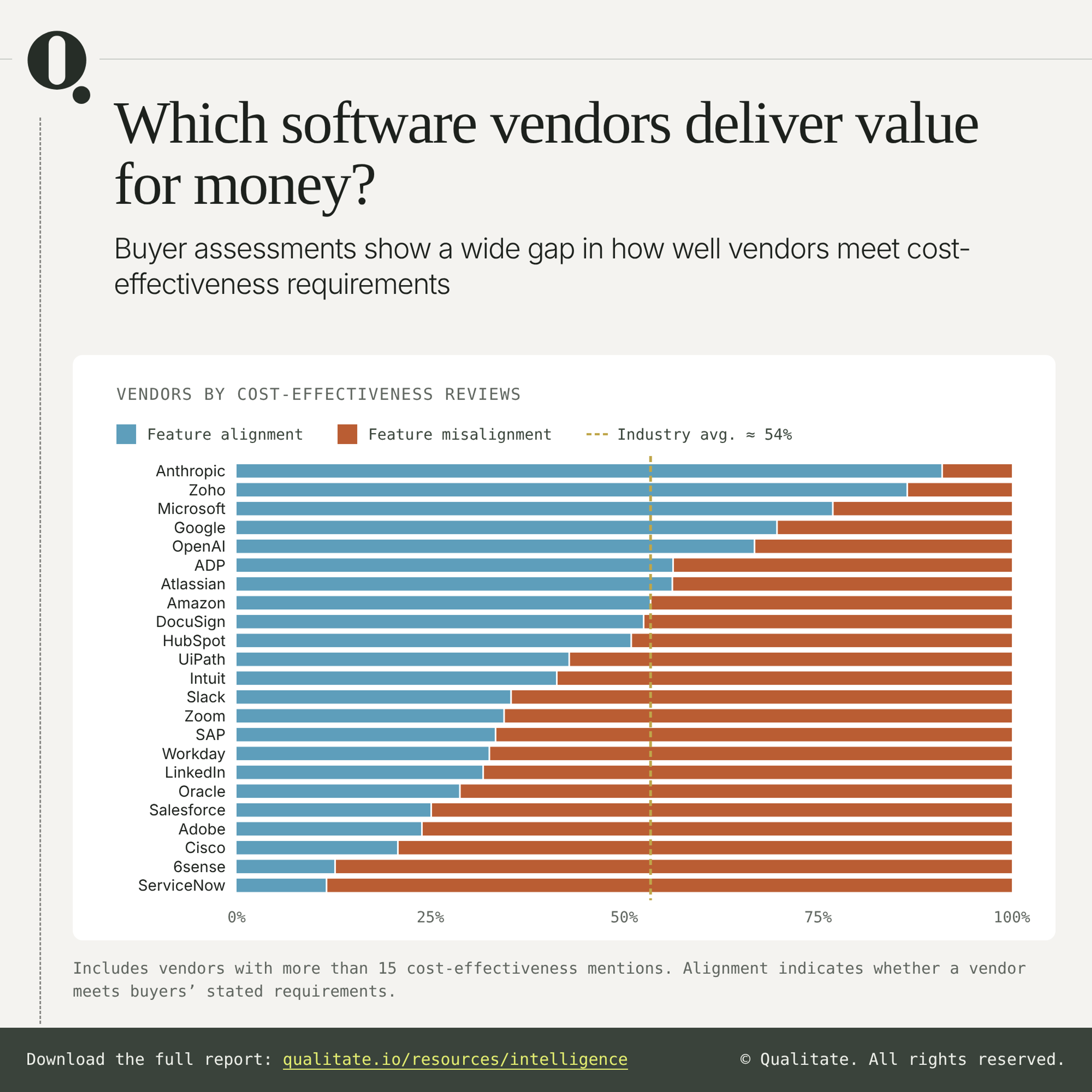
Cost-effectiveness rose in importance across every category. In Communication & Collaboration and Knowledge & Content Management, it jumped 12 positions in buyers’ purchasing priorities.
Our vendor comparisons show substantial differences in how well products meet those expectations. For example, Microsoft and Google sit above the report’s average for cost-effectiveness, while Salesforce, Oracle, and ServiceNow sit below it.
Download the report for the full breakdown of purchasing priorities and vendor comparisons.
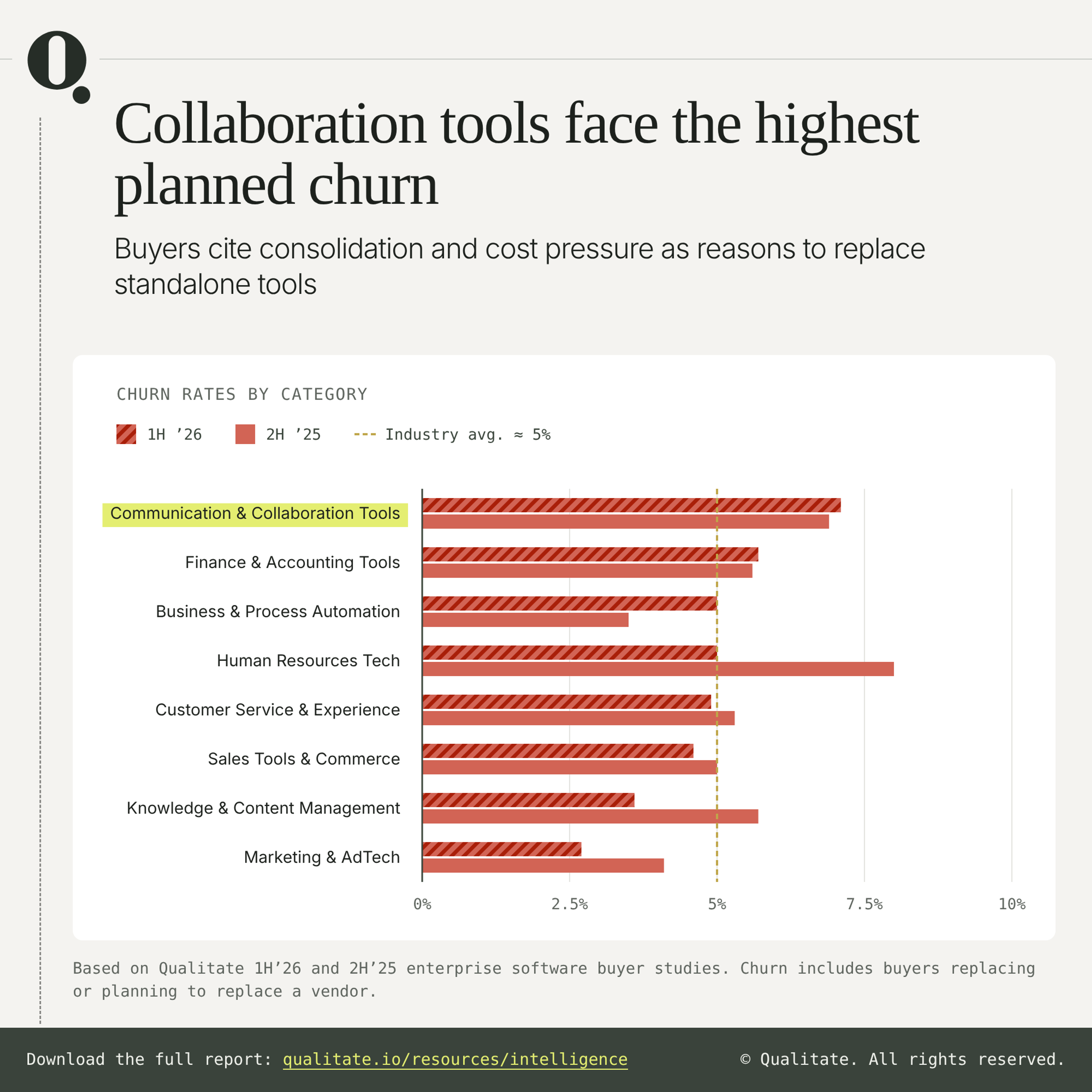
4. Bundled software is making standalone tools harder to justify
Vendor consolidation is the largest driver of planned spending decreases.
In collaboration software, buyers question whether separate tools offer enough differentiation to justify another subscription. One Director of Technology Services put it simply: “adding another vendor on top of that just doesn't make sense financially.”
Bundling also helps retain products. Knowledge & Content Management buyers cite existing licenses and deep integrations as reasons to keep their current tools.
5. Core HR systems are becoming harder to replace
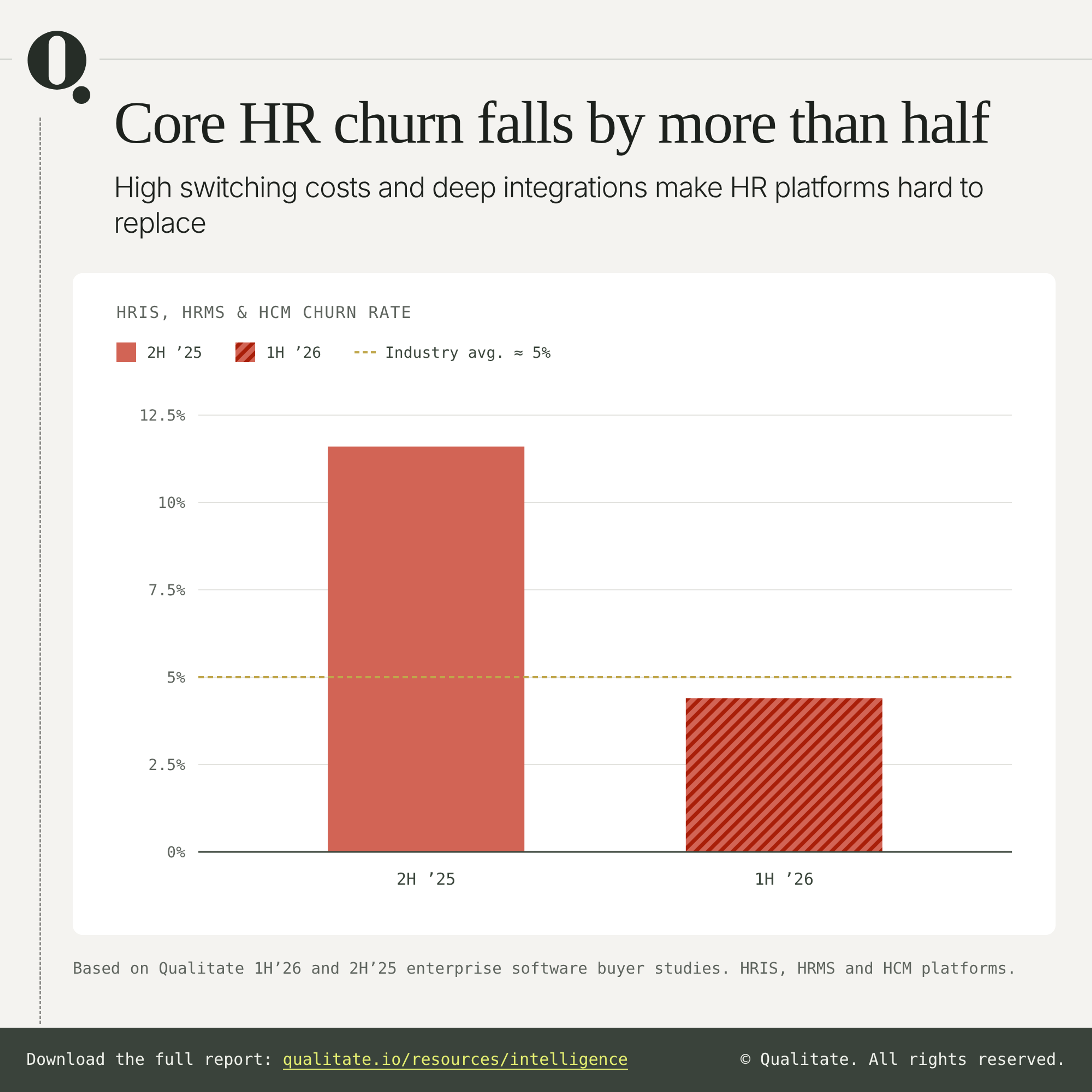
HR Tech showed the strongest relative spending resilience of any category, alongside the largest improvement in planned churn.
Within core HR systems, planned churn more than halved from the prior study. Buyers describe platforms embedded in payroll, employee records, and workflows that connect HR to the rest of the organization.
Replacing them means migrating data, rebuilding integrations, and retraining employees. That makes maintaining a stable system a higher priority than adopting another product.
6. Customer service has pockets of accelerating spend
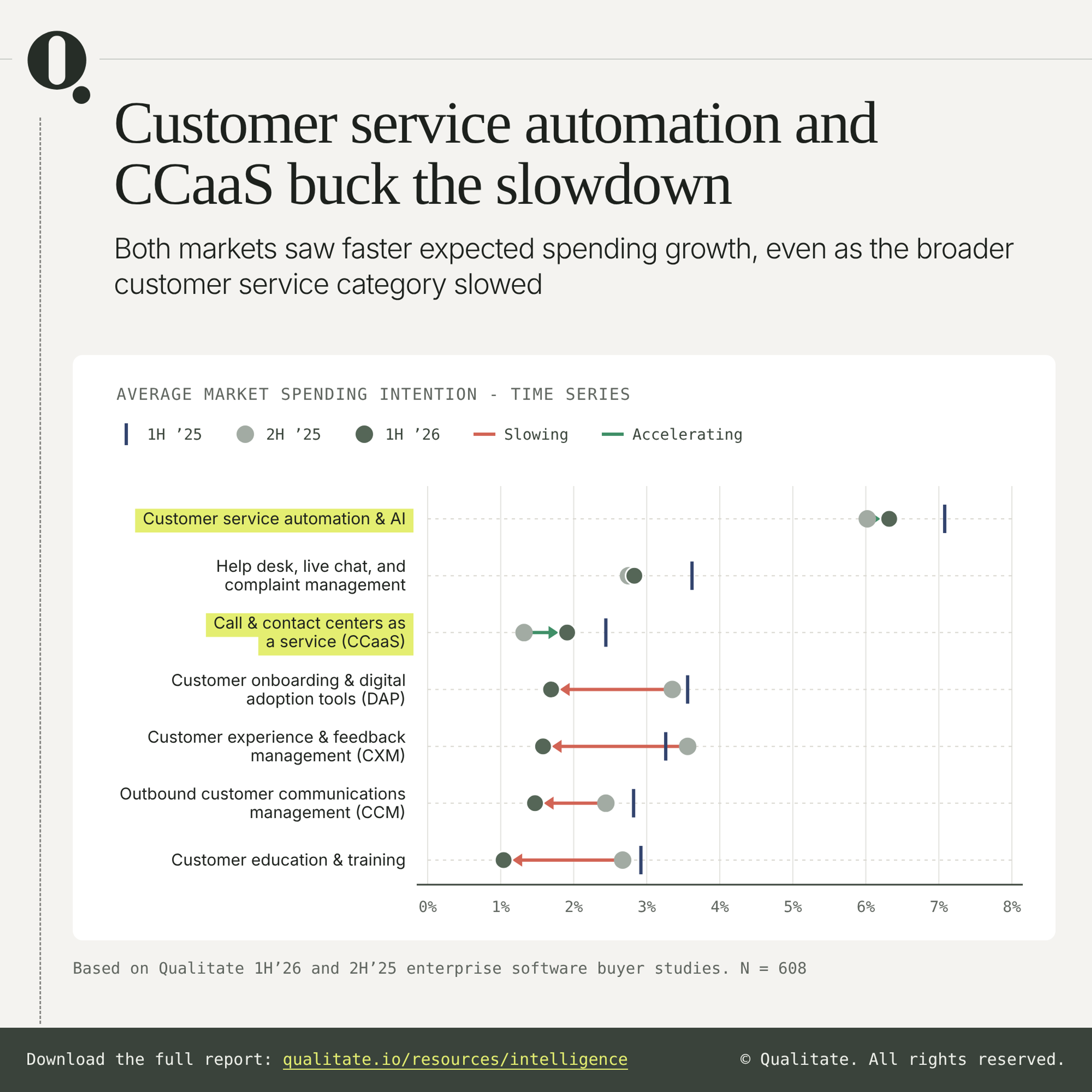
Customer Service Automation & AI and Contact Center as a Service (CCaaS) were among the few markets where expected spending growth accelerated versus the prior study.
Buyers are funding specific operational changes. In customer service automation, that includes handling repetitive requests and introducing capabilities for the first time. In CCaaS, buyers cite agent assistance, migration from legacy systems, and support for additional communication channels.
Get the report
Download the 23-page report for the charts and buyer evidence behind these six trends, including:
- Spending comparisons across enterprise software categories and individual markets.
- Evaluation and conversion trends, with buyers’ reasons for choosing or rejecting vendors.
- Cost-effectiveness reviews